

What Causes Pigmentation on the Face? Types, Triggers & Prevention

In This Article
What Is Pigmentation on the Face?
Why Does Pigmentation Appear on the Face?
What Do Pigmentation Spots on the Face Look Like?
How Does a Dermatologist Identify the Cause?
How Can You Help Prevent Facial Pigmentation?
How to Remove Pigmentation From the Face: What Are the Options?
When Should You Consult a Dermatologist?

A breakout settles, but the brown mark stays. Or a darker patch appears across your cheeks for no obvious reason. Before buying another brightening serum, it helps to understand what your skin is responding to
Facial pigmentation commonly develops through sun exposure, inflammation after acne, hormonal influences and irritating skincare products. These triggers can increase or disrupt melanin production, leaving darker spots or patches. Some medicines and medical conditions also cause colour changes. Identifying the cause helps determine suitable treatment.
What Is Pigmentation on the Face?
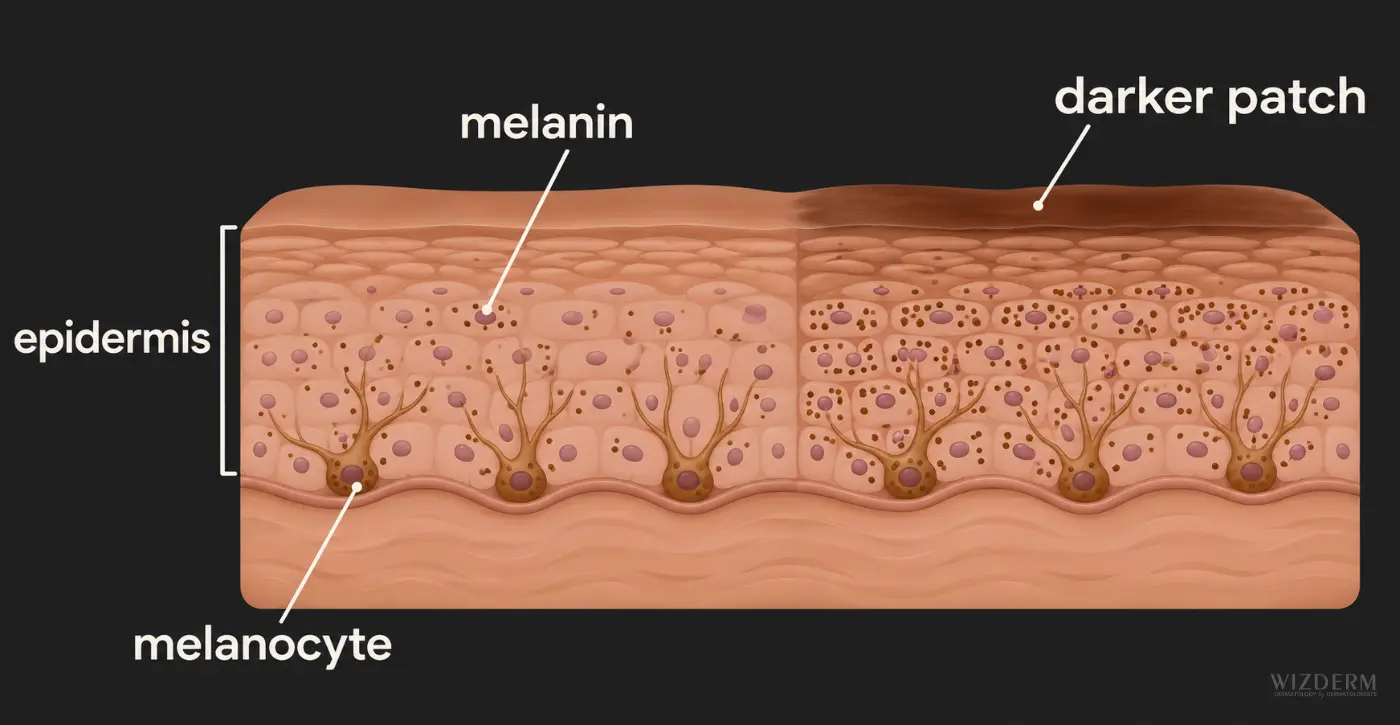
Pigmentation refers to your skin’s natural colouring. When certain areas become darker than the surrounding skin, this is called hyperpigmentation. It can appear as individual dark spots, larger patches, or an uneven skin tone. Understanding the cause helps determine the best care.
Melanin, produced by cells called melanocytes, contributes to your skin’s colour. Changes in its production or distribution can make some areas appear darker.
Your natural skin colour is not a condition that needs correcting. The concern is a change in pigmentation, rather than having a particular complexion.
Why Does Pigmentation Appear on the Face?
Facial pigmentation causes often overlap. A person with acne marks, for example, may notice that sunlight makes those marks more prominent.
Understanding the reasons for pigmentation on the face means considering both the original trigger and factors that keep the darkening noticeable.
1. Sun Exposure and Accumulated Sun Damage
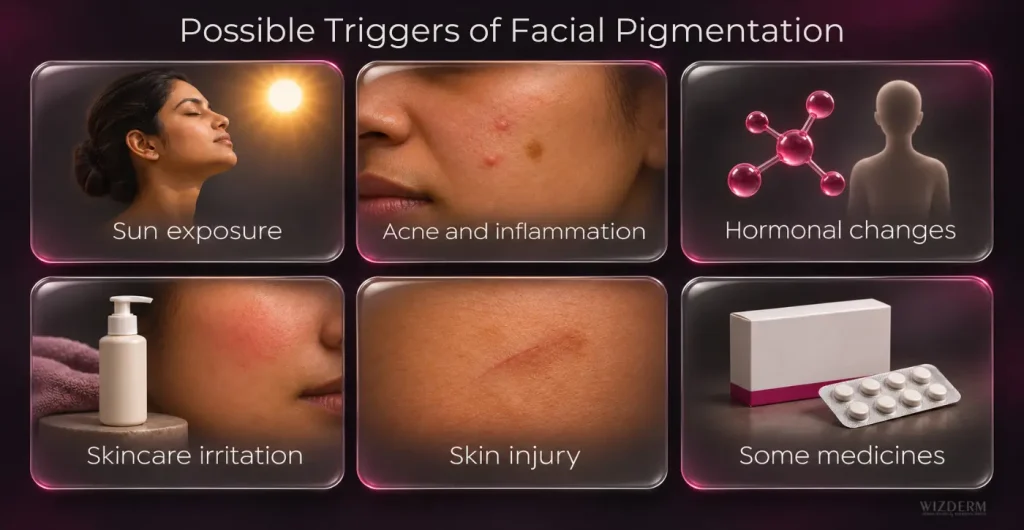
Ultraviolet radiation stimulates melanin production. Repeated exposure can contribute to persistent sunspots, also called solar lentigines.
These sun-related age spots commonly appear on frequently exposed areas, including the face. Unlike a temporary tan, they may remain noticeable after sun exposure decreases.
Visible light from sunlight can also worsen melasma, particularly in darker skin tones. This is why pigment-focused sun protection involves more than choosing an SPF number.
2. Acne, Eczema and Other Inflammation
Dark spots on the face after acne often represent post-inflammatory hyperpigmentation, or PIH. Inflammation can leave extra pigment behind after the original breakout settles. Eczema and other inflammatory conditions can produce similar marks.
However, a flat brown mark is not necessarily an acne scar. The distinction between post-acne dark marks and acne scars matters when choosing treatment.
Scars change the skin’s texture, creating an indentation or raised area. Pigmentation changes its colour, although both concerns can occur together.
Managing ongoing acne matters alongside fading existing marks. Otherwise, new breakouts may leave additional spots while older ones are improving.
3. Hormonal Changes Associated With Melasma
Hormonal pigmentation on the face often refers to melasma. Pregnancy and hormonal contraceptives are among the recognised melasma triggers.
Melasma commonly produces brown or grey-brown patches on the cheeks, forehead or upper lip. These patches often appear on both sides of the face.
Having melasma does not automatically mean you have a hormonal disorder. Its development involves several influences, including sunlight and individual susceptibility.
4. Irritating Skincare and Excessive Exfoliation
Burning, stinging or persistent redness can signal that your routine needs reviewing. Irritation may worsen existing pigmentation or contribute to new dark marks.
Strong products are not necessarily better products. Discomfort should not be treated as proof that a treatment is working.
Repeated scrubbing can make matters worse by irritating the skin. Trying harder to remove pigment may create the inflammation that keeps it noticeable.
Gentle, consistent care is more useful than repeatedly changing products or increasing exfoliation.
5. Skin Injuries and Unsuitable Procedures
Cuts, burns and other injuries can leave darker marks during healing. This colour change may remain after the original injury has resolved.
Cosmetic procedures can also cause pigment changes. For example, chemical peel side effects can include temporary or lasting changes in skin colour.
This does not make every procedure unsuitable for darker skin. It makes appropriate assessment, practitioner experience and aftercare especially important.
A treatment should suit your diagnosis and skin, rather than simply promise the fastest result.
6. Certain Medicines
Some medicines can trigger pigmentation or make skin more sensitive to sunlight. Examples include certain anti-seizure medicines and some antibiotics.
Tell your dermatologist about prescription medicines, supplements, and products applied to your skin.
Do not stop a prescribed medicine because you suspect pigmentation. Speak with the prescribing clinician about possible causes and suitable alternatives.
7. Family History and Individual Susceptibility
Melasma is more common in people with a family history of the condition. However, having an affected relative does not mean you will definitely develop it.
This is one reason pigmentation should not be treated as evidence of poor hygiene. People with consistent skincare habits can still develop dark patches.
8. Less Common Underlying Health Conditions
Occasionally, pigmentation accompanies a medical condition rather than an isolated skin concern.
Addison’s disease, for example, can cause skin darkening alongside fatigue, weight loss, or dizziness. It is a rare condition, not the usual explanation for facial marks.
Vitamin B12 deficiency has also been associated with hyperpigmentation in published case reports. Facial pigmentation alone cannot establish either diagnosis.
Understanding hyperpigmentation causes means considering the whole picture, rather than assuming every patch needs a stronger cream.
A Note on Indian Skin Tones
Indian skin tones are diverse. People with medium-to-deep complexions can be particularly troubled by lingering marks after inflammation.
Treatment should reflect your individual skin, rather than assumptions based on nationality. Managing acne early and avoiding unnecessary irritation can help reduce additional marks.
Protecting the skin while treating the underlying condition is especially important when pigmentation develops easily.
What Do Pigmentation Spots on the Face Look Like?
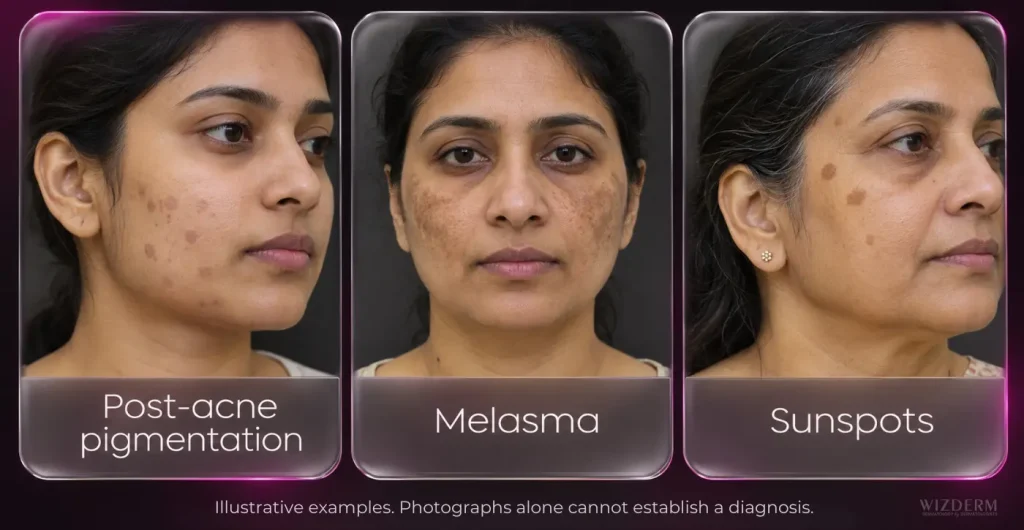
Appearance provides useful clues, but different conditions can look similar. The following patterns suggest possibilities, rather than providing a method for diagnosing yourself.
Appearance or pattern | Possible explanation | Helpful information to share |
1. Flat dark marks where pimples previously appeared | Post-inflammatory hyperpigmentation | When the breakouts occurred and whether new spots are developing. |
2. Brown or grey-brown patches across both cheeks or the upper lip | Melasma | Pregnancy, hormonal medicines and sun exposure. |
3. Defined brown spots on frequently exposed areas | Solar lentigines or other pigmented lesions | Changes in size, shape or colour. |
4. Darkening after a product reaction, burn or injury | Inflammation-related pigmentation | Products, procedures or injuries preceding the change. |
How Does a Dermatologist Identify the Cause?
A consultation usually begins with the pattern of darkening and its history. Your clinician considers when it started, how it has changed and whether symptoms occurred beforehand.
Bring your skincare products or ingredient lists, medication details and photographs showing changes. Mention previous breakouts, itching, pregnancy and recent procedures.
These details help distinguish possible causes of dark spots on the face.
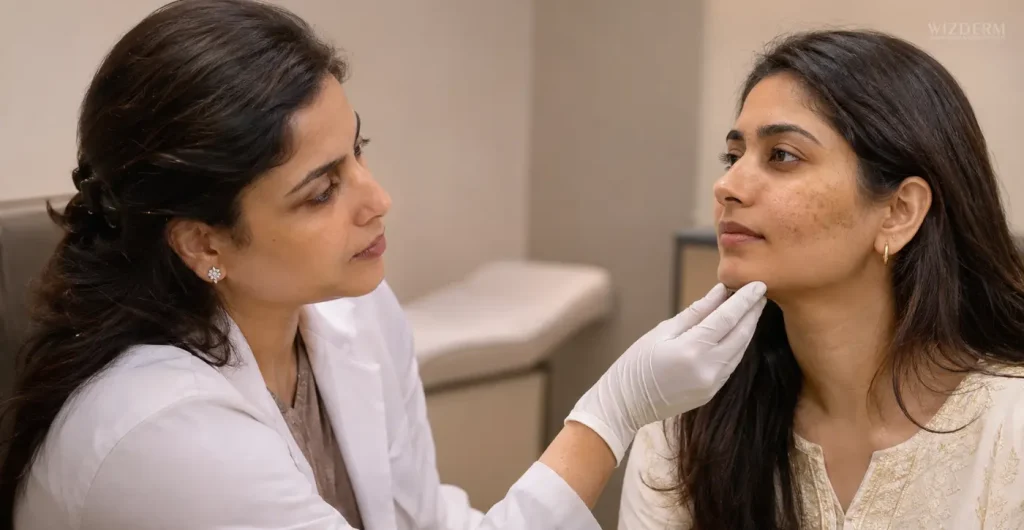
During an assessment, a dermatologist may use a dermatoscope or Wood’s lamp. These tools can support examination, but are not required for every patient.
Occasionally, a biopsy helps distinguish melasma from another condition. Additional investigations depend on the clinical findings, rather than being necessary for everyone.
A dermatologist’s assessment of facial pigmentation helps establish the diagnosis before treatment begins.
How Can You Help Prevent Facial Pigmentation?
During an assessment, a dermatologist may use a dermatoscope or Wood’s lamp. These tools can support examination, but are not required for every patient.
Occasionally, a biopsy helps distinguish melasma from another condition. Additional investigations depend on the clinical findings, rather than being necessary for everyone.
A dermatologist’s assessment of facial pigmentation helps establish the diagnosis before treatment begins.
Make Sun Protection Consistent
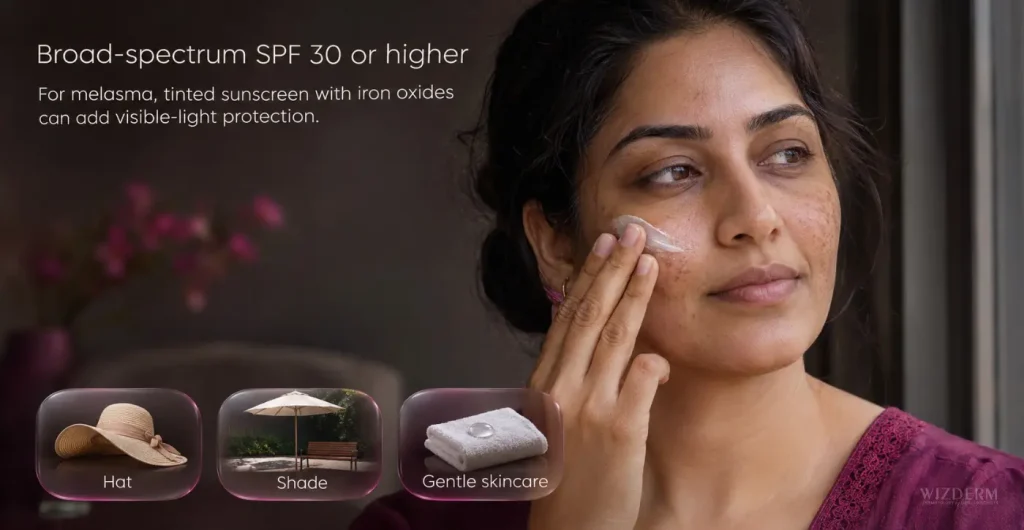
Use broad-spectrum, water-resistant sunscreen with SPF 30 or higher. Combine it with shade and protective clothing, including a wide-brimmed hat.
Reapply approximately every two hours outdoors, and after swimming or sweating. Sun protection remains important on cloudy days.
Consider Visible-Light Protection
For melasma, a tinted sunscreen containing iron oxides can provide additional protection against visible light. It should still offer broad-spectrum ultraviolet protection.
Research examining iron oxides and visible-light-induced pigmentation supports the protective role of these formulations.
They complement sun-protection habits rather than replace appropriate treatment.
Treat Inflammation and Protect Your Skin Barrier
Address acne and eczema rather than concentrating only on the marks they leave.
Use a gentle cleanser and a suitable moisturiser. Avoid picking, aggressive scrubbing, and repeatedly applying products that cause irritation.
For acne-prone skin, products labelled non-comedogenic can help avoid additional pore-clogging triggers.
Be Cautious With DIY Remedies
Lemon juice and other kitchen mixtures are not substitutes for a diagnosis. Natural ingredients can irritate or injure skin.
Some DIY pigmentation remedies can worsen the problem by causing burns or inflammation. A homemade mixture is not automatically gentler than a professionally formulated product.
How to Remove Pigmentation From the Face: What Are the Options?
The first step is identifying the cause and controlling its triggers. Treatment then depends on the diagnosis, skin tone, pigment depth and previous reactions.
A dermatologist may recommend topical medicines, including azelaic acid or other carefully supervised prescription treatments.
A personalised plan for pigmentation removal may combine topical care with selected procedures. Chemical peels or laser-based treatments may suit some patients, but they are not necessary for everyone.
Procedures carry risks, including irritation and further pigment changes. Choosing treatment requires balancing potential benefits against those risks.
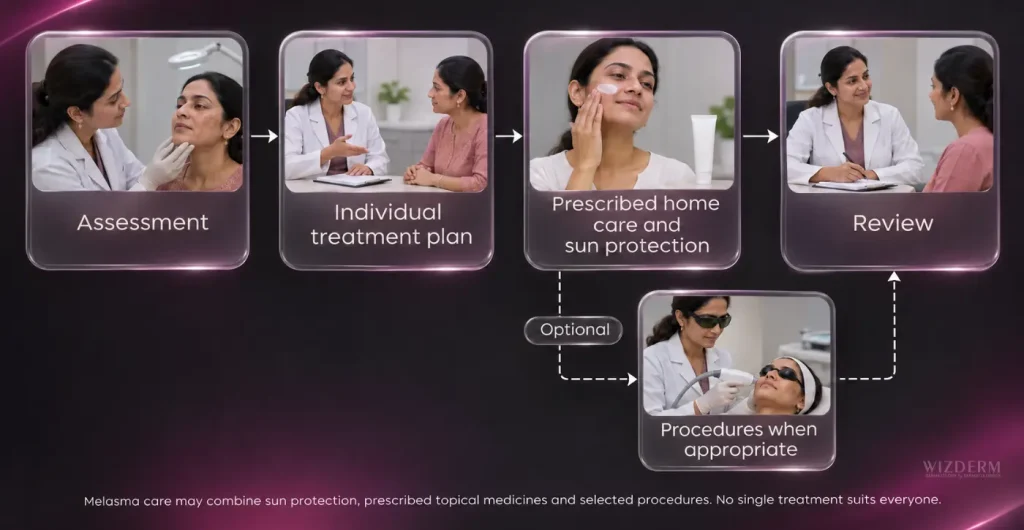
Prescribed treatment used at home is different from a homemade remedy. A cream selected by your dermatologist can form an important part of professional care.
When comparing professional skin-lightening treatments with at-home remedies, consider suitability and irritation risks, not simply convenience. Lemon juice and abrasive mixtures can damage skin, while procedures also require careful selection.
The aim is to improve unwanted unevenness while respecting your natural skin tone. Permanent clearance cannot be promised, particularly with recurring conditions such as melasma.
When Should You Consult a Dermatologist?
Arrange an assessment when pigmentation persists, keeps returning or remains unexplained. Professional assessment is also worthwhile before starting strong pigment-lightening products or booking a procedure.
Seek prompt assessment for a spot that grows, bleeds, develops irregular borders or changes colour. Do not assume that every changing mark is cosmetic.
Widespread darkening accompanied by fatigue, dizziness or unexplained weight loss also deserves medical attention. These symptoms need assessment rather than treatment with a brightening product alone.
Start With the Cause, Not Another Product
Understanding your pigmentation can make skincare decisions less confusing. The next step need not be the strongest cream or an immediate procedure.
For persistent or unexplained patches, a dermatology consultation at Wizderm provides an opportunity to discuss assessment and suitable care.
FAQs
Why Is My Face Getting Darker Than My Neck?
Different sun exposure, melasma or inflammation can contribute to uneven facial darkening.
Comparing your face with your neck cannot identify the cause. Persistent changes need assessment, particularly when accompanied by itching, irritation or other symptoms.
What Causes Brown Patches on the Face?
Melasma, sun-related spots and post-inflammatory hyperpigmentation can all produce brown patches.
Symmetrical patches may suggest melasma, while marks following acne suggest inflammation-related pigmentation. However, their patterns can overlap.
A dermatologist can distinguish these possibilities and check for other causes.
Can Skincare Products Cause Pigmentation?
Yes, products that irritate your skin can contribute to darkening after inflammation.
Stop using a new non-prescription product that causes persistent irritation, and seek advice when symptoms continue. Discuss reactions to prescribed products with your clinician.
Does Pigmentation Fade on Its Own?
Some post-inflammatory marks gradually fade after the trigger is controlled.
Relatively superficial dark spots may take six to twelve months to fade. Deeper pigmentation can take considerably longer.
These are broad timelines, not guarantees, and continuing inflammation can create new marks.
Can Pigmentation Be Removed Permanently?
Some marks improve substantially, but permanent clearance cannot be guaranteed.
Melasma often needs ongoing management and may return after treatment stops. Sun protection and maintenance care help support longer-term improvement.
Which Vitamin Deficiency Can Cause Facial Pigmentation?
Published case reports describe an association between vitamin B12 deficiency and hyperpigmentation.
That does not establish deficiency as the cause of an individual’s facial patches.
A clinician can assess whether your symptoms or dietary history justify testing. Avoid taking supplements solely to lighten pigmentation.
Can Stress Cause Pigmentation on the Face?
Stress is not a universal explanation for dark spots.
Some research suggests a possible relationship with melasma, but the evidence remains uncertain.
Persistent pigmentation still needs assessment for recognised triggers, rather than being dismissed as stress.


