In this Article
What is Female Pattern Baldness?
What are the Signs of Female Pattern Baldness?
Stages of Female Pattern Hair Loss
Causes of Female Pattern Baldness
Diagnosis of Female Pattern Baldness
What’s happening on the Scalp in Stage 5?
Treatments Available for Female Pattern Baldness
Prevention of Hair Loss in Females
When to Consult with a Doctor?
Female Pattern Baldness: Causes, Symptoms, and Treatments Explained
Male Pattern Baldness Today: What’s Changed?
Stage 1 Of Male Pattern Hair Loss: The Calm Before the Storm
Stage 2 Of Pattern Baldness in Men: The Temple Recession
Stage 3 Of Pattern Baldness in Men: Recession Becomes Reality
Stage 4: Crown Thinning Begins
Stage 5: When Front and Crown Connect
When to Seek Professional Help? Stage 6 & 7: The Advanced Phases
Hair loss can be stress-induced, seasonal and even a result of a poor diet. It is a very common concern for most individuals; however, it can get overwhelming for women. Globally, millions of women are affected by female pattern baldness, leaving them vulnerable on their happiest days. Studies show that 20 to 30% of women in India experienced severe hair loss and thinning in 2020.
While women of any age can be affected by the condition, research suggests that female pattern hair thinning is common in 40% of Indian women by their 40s. Early pre-screening can increase the efficacy of hair loss treatments.
Learn which treatment is best for hair loss by understanding the stages of baldness in women. This article outlines a comprehensive study on androgenetic alopecia, so read on for more details.
What is Female Pattern Baldness?
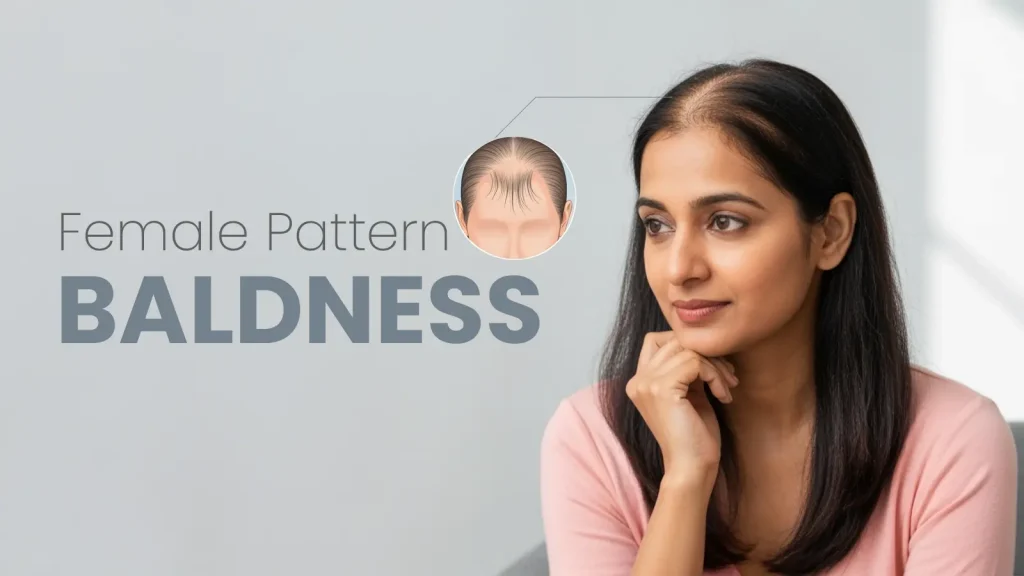
Female pattern baldness, also known as androgenetic alopecia, is a condition in females in females characterised by hair thinning on the scalp. While this medical condition can affect females of any age, it is more common in women over the age of 50, especially after menopause.
While male pattern baldness (also called androgenic alopecia) is characterised by thinning at the crown and a receding hairline, female pattern hair loss (FPHL) displays balding across the top of the scalp.
What are the Signs of Female Pattern Baldness?
Female pattern hair loss is characterised by gradual thinning across the scalp, with the hairline usually remaining intact. You may first notice more than 100 strands on your brush each day, or perhaps see your hair part widening—especially in the centre—or less volume at the front.
While this condition isn’t physically painful, it can affect your confidence at every stage of hair loss. To help diagnose and treat the condition, dermatologists often use the Ludwig Scale, which outlines three distinct stages of female hair loss.
Stages of Female Pattern Hair Loss
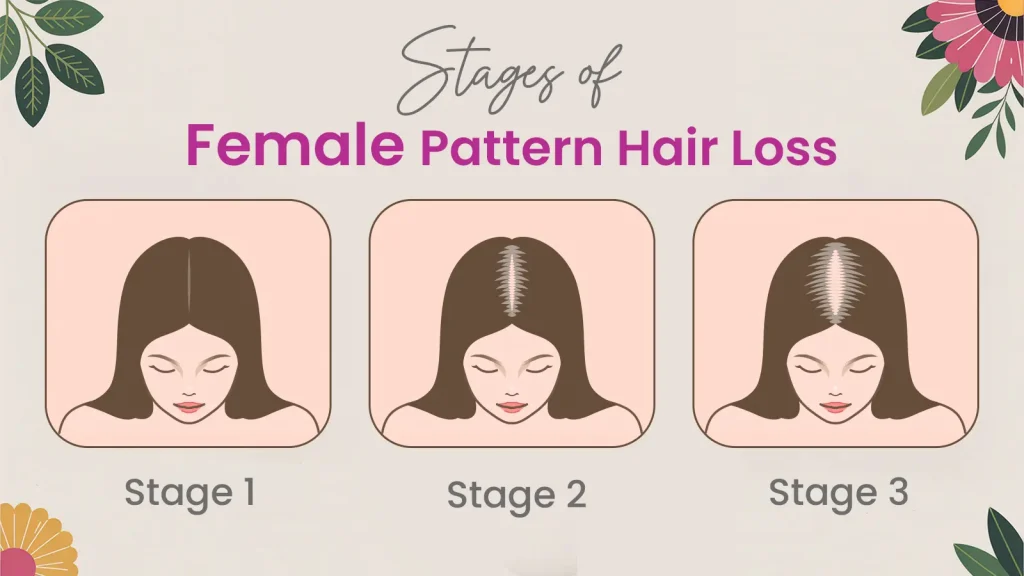
Dealing with hair loss can be emotionally challenging. With the help of the Ludwig Scale, hair loss experts can suggest effective treatment to promote hair growth. Let’s understand it now:
Stage 1 / Ludwig Scale Type 1 (Early Thinning)
This stage features widening of the hair parting from the centre of the scalp. You may notice that hair appears less voluminous than before; however, no changes will be seen along the hairline yet.
In the 1.1 sub-stage (or the ‘natural hair parting’ phenomenon), the hair along the central scalp seems naturally thick. The skin on the central part of the scalp is also less visible here. Gradual hair thinning starts around the area by 1.2, and intensifies towards the sub-stage 1.3. Often, hair loss experts will recommend clinically proven PRP treatments to thicken the gap.
Stage 2 / Ludwig Scale Type 2 (Progressive Thinning)
Hair loss and thinning in the top middle part progress to the second stage, with more visibility than before. You may also realise that hair volume has decreased considerably. While the middle part widens, the thinning extends to the crown. Hair styles may not hold up well as the hair feels and looks thinner. Furthermore, hair shedding increases when you shower or brush through the hair.
Stage 3 / Ludwig Scale Type 3 (Advanced Hair Loss)
The most severe form of hair loss in females starts in this stage. The bald patches become much more noticeable. You may lose the overall hair density, and may even notice complete loss of hair in the frontal scalp. This extreme form of hair loss pattern is difficult to treat unless you seek expert hair transplant services.
Causes of Female Pattern Baldness
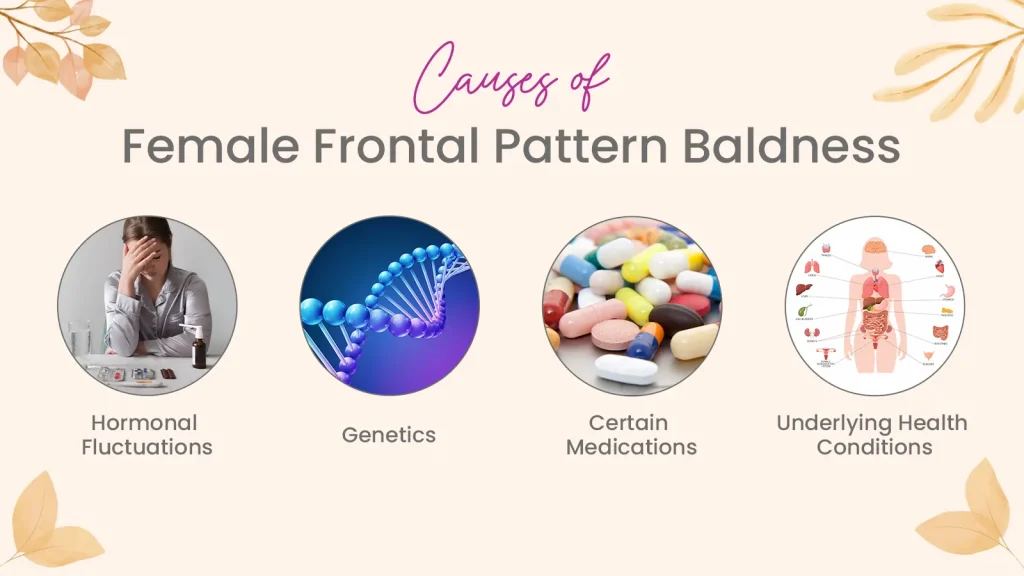
Age is one of the common causes of female frontal pattern hair loss. The other causes of hair loss in females are outlined below:
Hormonal Fluctuations
The DHT or dihydrotestosterone hormone (an androgen type) helps with physical maturity. During puberty, it accelerates hair growth on the face, scalp, and the rest of the body. However, scientists and researchers link the DHT hormone to male and female pattern baldness. In females, especially after menopause, this hormone binds to hair follicles, causing them to shrink and shorten the hair growth cycle. This can therefore be a reason for hair thinning in women, which may ultimately lead to hair loss in some cases.
Genetics
Female pattern hair loss (FPHL) is often considered a genetic condition, where the inherited genes make the hair follicles more vulnerable to androgens like DHT. This results in shrinkage of hair, which ultimately leads to the production of shorter, thinner, and more damage-prone follicles.
Certain Medications
Medications like beta blockers, chemotherapy, antidepressants, and blood thinners can contribute to hair loss in women.
Underlying Health Conditions
In some females, frontal hair loss can be a sign of an underlying medical condition, like autoimmune or hormonal disorders. Women affected by anaemia, alopecia areata, polycystic ovary syndrome (PCOS), thyroid problems, and lupus can be significantly prone to hair loss.
Diagnosis of Female Pattern Baldness
You can easily recognise hair loss in women by the appearance and differences of their hair texture, volume and density. However, a medical expert may need to perform a physical exam to confirm the treatment. It is also important to rule out other potential causes of hair loss to ensure an accurate diagnosis.
Questions such as medical history, genetic history of baldness or hair loss and the initial period of noticing hair loss are common in such physical examination. Additionally, with the help of a densitometer, the doctor may also examine your scalp. They can measure the width of the central part of your scalp or other affected areas and the thickness of the hair follicles.
What's happening on the Scalp in Stage 5?
Upon finding a link between hair thinning and FPHL, the doctor may:
- Conduct blood tests
- Check hormone levels
- Perform a scalp analysis for signs of infection
- Collect a hair sample and submit it to a lab for examination
- Suggest a scalp biopsy to identify any underlying skin disease
Treatments Available for Female Pattern Baldness
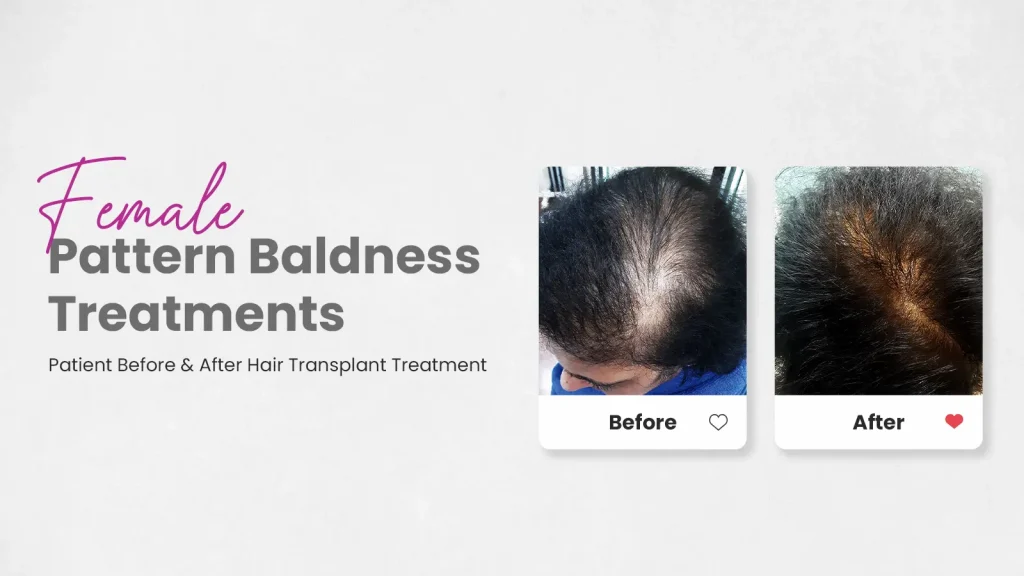
A healthcare provider can suggest a combination of hair treatment solutions for female pattern hair loss, some of which may include:
Over-the-Counter Medications
Minoxidil is a commonly prescribed medicine that may be suggested as the first course of treatment. With available formulas of 2% or 5%, minoxidil helps with significant hair regrowth, providing a thicker appearance. However, you should use it consistently for 6–12 months to see results. Other OTC medicines that can help manage female pattern baldness include Finasteride and Dutasteride. Some doctors may also recommend Spironolactone, which helps remove excess bodily fluid and prevents androgen production, thereby inducing hair regrowth.
Hair Transplant
A hair loss expert can recommend this treatment to women who have not responded well to the other available treatments. In this process, hair follicles are transplanted across scalp areas with healthy hair growth to the bald or thinning-affected areas.
Red Light Laser Therapy
Also called low-level laser therapy, this non-invasive hair treatment uses red light to promote hair follicle regeneration. This procedure exposes the scalp to specific light wavelengths, which penetrate the hair follicles. This increases cell proliferation and enhances blood circulation across the affected areas.
PRP Therapy
Platelet-Rich Plasma (PRP) therapy for hair involves drawing the patient’s own blood and injecting it into the scalp to rebalance the hair follicle activity. The growth factors in the platelet-rich plasma help significantly in promoting hair regeneration and enhancing hair density.
Styling Accessories
For people who are apprehensive or uncomfortable about availing all the above-listed clinical treatment options, managing female pattern hair loss with wigs or certain hairstyles can be a helpful alternative.
It’s important to note that treatment effectiveness varies between individuals, and consulting with a healthcare professional is essential to develop a personalised treatment plan.
Prevention of Hair Loss in Females
The following are 3 practical ways one can keep their hair healthy, and can prove to help with hair growth:
- Take Vitamins like A, B, C, D, E, iron, and zinc (upon discussing with a doctor)
to support healthy skin, hair, and muscle tissue. - Include More Protein in the diet, aiming for 40–60 grams of protein per day
to help manage hair loss in women. - Manage Stress as it may increasingly trigger androgen activity,
thereby worsening FPHL.
When to Consult with a Doctor?
Reaching out to a healthcare professional at the very instant one notices the signs of female hair loss can help treat the condition at the earliest. While it may be emotionally challenging to deal with the constant fear of losing one more strand of hair, it is essential to reach out for help from friends, family and an expert.

Final Notes from Wizderm Skin And Hair Clinic
Don’t let Female pattern baldness affect your mental health. Wear your hair in your desired way with confidence while guided by a highly recognised skin and hair clinic, Wizderm. At Wizderm Skin and Hair Clinic, we offer advanced hair treatment for hair loss that ensures minimally invasive, highly effective and painless hair regrowth.
Take a step forward to accomplishing your hair goals today – book an appointment at your nearest Wizderm Skin and Hair Clinic now!
FAQs
Can hair grow back from female pattern hair loss?
Female pattern hair loss, or androgenetic alopecia, is not fully reversible. However, availing clinical treatments or OTC medications like hair transplant, PRP therapy or minoxidil, regrowth is possible.
Does female pattern hair loss go away?
Hair loss cannot be completely reversed. When the condition is left untreated or when the hair loss cycle progresses to the advanced stage, it can lead to permanent hair loss. However, with the help of professional guidance and hair loss treatments, potential hair growth is achievable.
What is the average age at which female pattern baldness typically occurs?
Androgenetic alopecia in women can start at any age. However, it is more prevalent in women aged between 40 – 60, as they reach or are at menopause.
What vitamin deficiency causes hair loss in females?
Deficiency in vitamin D, B (biotin, folate and B12), zinc and iron can disrupt the hair growth cycle. This can result in weak hair follicles and increased hair shedding and thinning.
What to eat to prevent hair fall?
Preventing hair fall requires a holistic approach, including healthy hair habits, seeking professional treatments and consuming a healthy diet. Try incorporating foods that are rich in iron, protein, omega-3 fatty acids and biotin to promote hair growth and health.
How do I know if my hair loss is genetic as a female?
Hair loss in women is primarily caused by genetic factors. This can be identified by hair thinning, excessive hair shedding, a widening middle parting, and a receding hairline. However, a healthcare professional will only be able to confirm this through a comprehensive diagnosis. It is important to consult a healthcare provider for an accurate evaluation and personalised advice.
Does PRP work for pattern baldness in females?
PRP hair therapy for hair loss works in both males and females, and on every scalp type. It is an effective treatment that involves using the patient’s own blood to promote hair growth, and is highly beneficial if availed in the earlier stages of balding.
Can female pattern baldness be cured?
Hair baldness in women is treatable, not curable. This medical condition cannot be entirely reversed; however, effective treatments can help manage hair loss and potentially support hair growth. Consulting a healthcare professional ensures you receive the best guidance tailored to your individual condition.