Fractional CO₂ Laser for Acne Scars: How It Works, Cost & Results
In This Article
What Are Acne Scars and Why Do They Form?
What Is Fractional CO₂ Laser Treatment?
How Fractional CO₂ Laser Works on Acne Scars
How Fractional CO₂ Laser Helps Fade Acne Scars
Key Benefits of Fractional CO₂ Laser
The Fractional CO₂ Laser Treatment Process
Fractional CO₂ Laser Treatment Cost in India
Who Should Consider Fractional CO₂ Laser?
Possible Side Effects and Aftercare Tips

You know that sinking feeling when you catch your reflection under harsh light — and instead of smooth skin, all you can see are tiny craters and uneven marks left behind by old breakouts.
It feels unfair. You fought acne once, and somehow, you’re still fighting its ghost.
Acne scars don’t just linger on your skin; they quietly mess with your confidence, makeup routines, selfies, and sometimes even your mood. You start wondering if your skin will ever look like it used to.
Here’s the good news: it can.
Fractional CO₂ laser technology has become one of the most effective, dermatologist-preferred solutions for treating stubborn acne scars that refuse to fade with creams or peels. By working deep within the skin, it helps remodel damaged tissue and rebuild smoother, clearer skin from within.
At Wizderm, treatments are performed using the Lumenis UltraPulse CO₂ Laser, a globally trusted medical-grade platform known for its precision, safety controls, and proven clinical outcomes.
In this guide, you’ll learn how fractional CO₂ laser treatment works, why it’s different from older lasers, what results you can realistically expect, and why dermatologists worldwide rely on it for acne scar correction.
What Are Acne Scars and Why Do They Form?
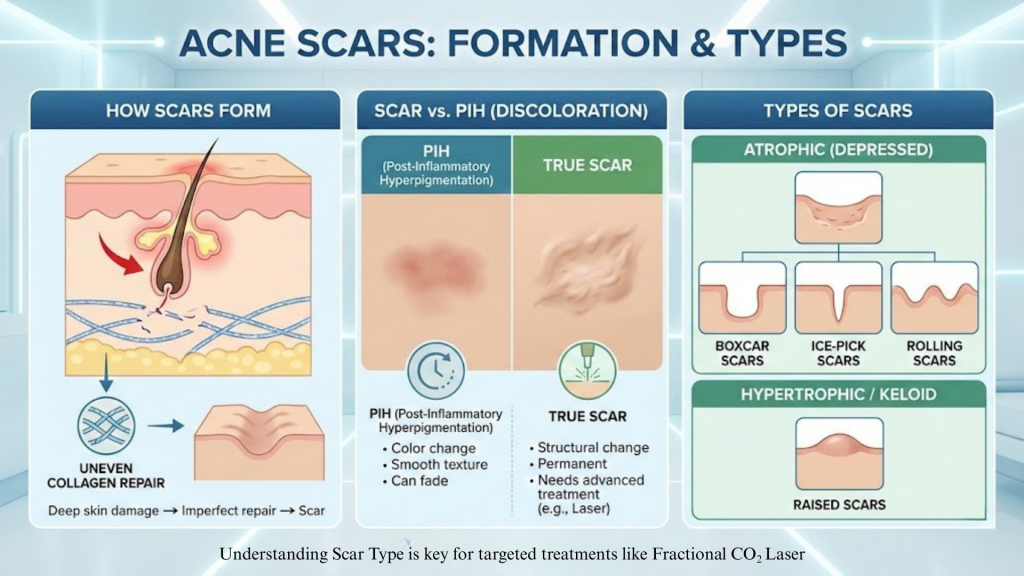
When acne damages the deeper layers of your skin, your body tries to repair the injury by producing collagen. But when this repair process is uneven or insufficient, scars form.
Sometimes what looks like a scar is actually post-inflammatory hyperpigmentation (PIH) — a colour change without texture damage. PIH can fade over time or with topical treatments. True acne scars, however, involve permanent structural changes and require advanced procedures like laser resurfacing.
Common Types of Acne Scars
- Atrophic (Depressed) Scars: Caused by collagen loss; the most common type.
- Boxcar Scars: Broad, U-shaped depressions with defined edges.
- Ice-pick Scars: Deep, narrow scars extending into the dermis.
- Rolling Scars: Wave-like depressions caused by tethered skin.
- Hypertrophic / Keloid Scars: Raised scars from excess collagen production.
Understanding your scar type is essential, because fractional CO₂ laser for acne scars works best for certain scar patterns and may be combined with other treatments for optimal results.
What Is Fractional CO₂ Laser Treatment?
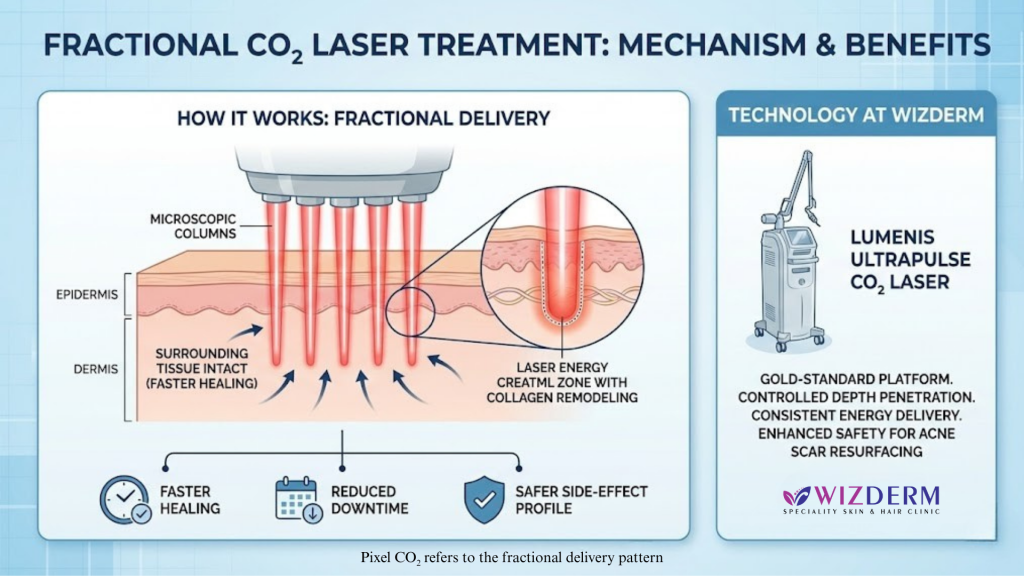
Fractional CO₂ laser treatment is an advanced skin-resurfacing procedure that delivers carbon dioxide laser energy into the skin in thousands of microscopic columns.
Instead of treating the entire skin surface at once, the laser targets only fractions of the skin, leaving surrounding tissue intact. This allows faster healing, reduced downtime, and a safer side-effect profile compared to traditional ablative lasers.
Pixel CO₂ refers to the fractional delivery pattern, not a different treatment altogether. What truly influences your results is the technology and precision of the CO₂ fractional laser machine, combined with the dermatologist’s expertise.
At Wizderm, treatments are performed using the Lumenis UltraPulse CO₂ Laser, a gold-standard platform widely used in dermatology for controlled depth penetration, consistent energy delivery, and enhanced safety — especially important for acne scar resurfacing.
How Fractional CO₂ Laser Works on Acne Scars
If you’ve ever wished for a “reset” button for your skin, Fractional CO₂ Laser comes close.
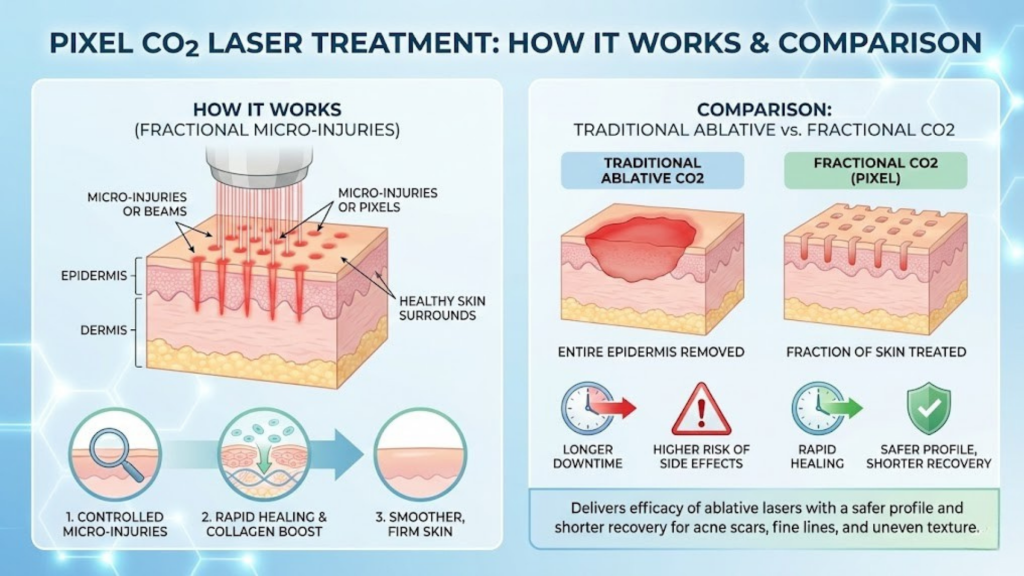
The laser creates controlled micro-injuries that stimulate your body’s natural wound-healing response. These microthermal zones activate fibroblasts to produce new collagen and elastin — the building blocks of smooth, firm skin.
This is precisely why fractional CO₂ laser benefits go beyond surface improvement. Over time, depressed scars lift, texture evens out, and skin quality improves from within.
Fractional vs Traditional Ablative CO₂ Laser
- Traditional ablative CO₂ laser: Removes the entire skin surface; effective but aggressive, with longer downtime and higher risk
- Fractional CO₂ laser: This technology treats only a portion of skin per session, allowing quicker recovery with strong collagen remodelling
Many dermatologists prefer fractional technology because it balances visible results with a safer recovery profile.
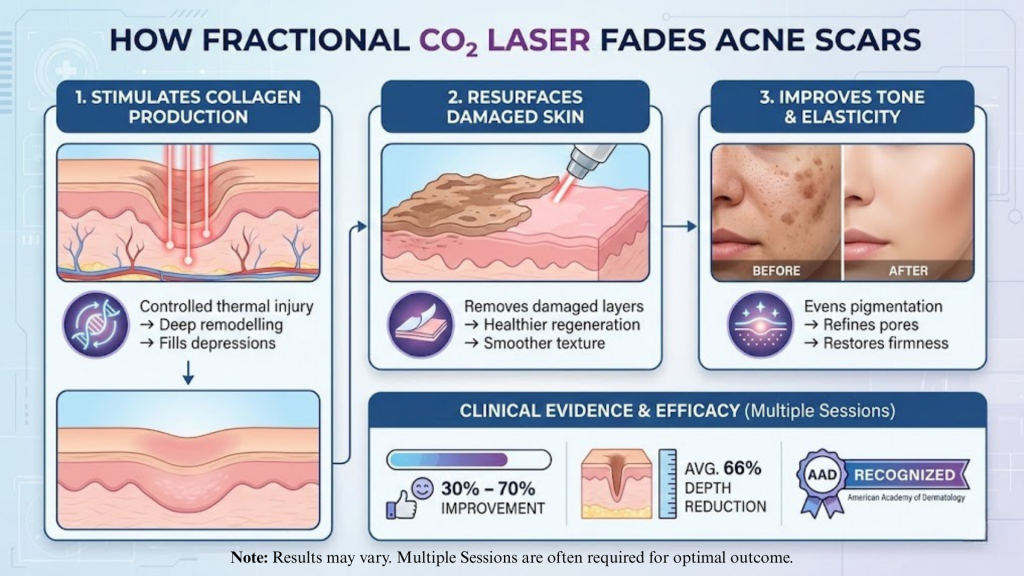
How Fractional CO₂ Laser Helps Fade Acne Scars
1. Stimulates Collagen Production
Controlled thermal injury promotes deep collagen remodelling, gradually filling in depressed scars and improving firmness.
2. Resurfaces Damaged Skin Layers
Damaged superficial layers are removed, allowing new, healthier skin to regenerate with smoother texture.
3. Improves Tone and Elasticity
Beyond scars, the treatment can help even out mild pigmentation, refine pores, and restore overall skin quality.
Clinical studies indexed on PubMed and National Center for Biotechnology Information report 30%–70% improvement in acne scar appearance, with topographic depth reductions averaging around 66% after multiple sessions.
The American Academy of Dermatology recognises laser resurfacing as an effective option for acne scars when topical treatments are insufficient.
Key Benefits of Fractional CO₂ Laser
- Visibly reduces acne scars and fine lines by addressing damage at the dermal level.
- Boosts collagen production for smoother, firmer skin.
- Minimal downtime compared to older lasers, with faster healing.
- Long-lasting results that continue improving over months.
- Laser for acne scars is customisable for most skin types when performed by experienced dermatologists.
Many patients also notice brighter skin, refined pores, and an overall improvement in skin quality.
The Fractional CO₂ Laser Treatment Process
Step 1: Consultation and Skin Analysis
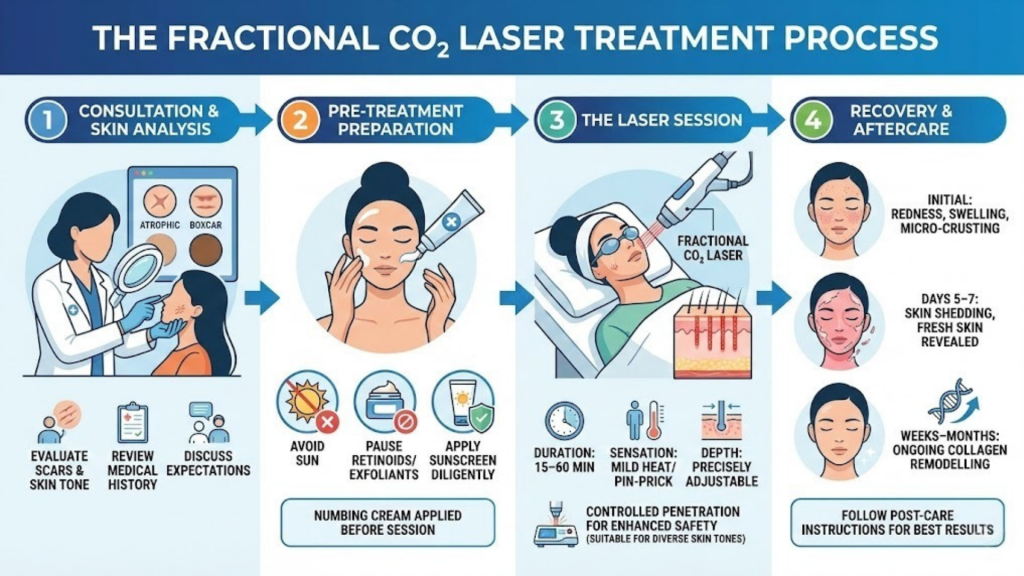
Your dermatologist evaluates scar types, severity, skin tone, medical history, and expectations.
Step 2: Pre-Treatment Preparation
You may be advised to pause retinoids or exfoliants, avoid sun exposure, and apply sunscreen diligently. Numbing cream is applied before treatment.
Step 3: The Laser Session
- Duration: 15–60 minutes
- Sensation: Mild heat or pin-prick feeling
- Depth: Precisely adjustable depending on scar severity
Advanced fractional CO₂ laser treatment protocols using platforms like UltraPulse allow controlled penetration, improving safety even for Indian skin tones when handled correctly.
Step 4: Recovery and Aftercare
Redness, swelling, and micro-crusting are expected initially. Skin typically sheds by days 5–7, revealing fresh new skin. Collagen remodelling continues for weeks to months.
Results: What You Can Expect
- Days 1–3: Redness and swelling
- Days 4–7: Peeling and shedding
- Week 2 onwards: Smoother, pink new skin
- Following months: Progressive scar softening
Most people need 3–4 sessions spaced several weeks apart. While improvement can be dramatic, complete scar removal is rare — especially for deep ice-pick scars.
Fractional CO₂ Laser Treatment Cost in India
The fractional CO₂ laser cost in India generally ranges from ₹3,000 to ₹15,000+ per session, depending on the clinic, city, and treatment area.
For small areas or mild scarring, costs are usually on the lower end. Full-face fractional CO₂ laser treatment or deeper acne scars require higher energy settings and may cost more per session.
Because acne scars often need multiple sessions, the fractional CO₂ laser treatment cost for a complete series typically ranges between ₹20,000 to ₹50,000, depending on:
- Severity and type of scars
- Number of sessions required
- Technology used (type of CO₂ fractional laser machine)
- Clinic reputation and dermatologist expertise
- City (metro cities like Delhi or Mumbai tend to cost more)
While cost is an important factor, choosing a clinic based solely on price can increase the risk of complications. With laser treatments, precision, experience, and post-care protocols matter far more than discounts.
Who Should Consider Fractional CO₂ Laser?
a. Ideal Candidates
- Moderate to severe atrophic acne scars
- Skin free from active acne
- Realistic expectations
- Willingness to follow aftercare
b. Who Should Use Caution
- Active acne or skin infections
- History of keloids or poor wound healing
- Very dark skin tones (higher pigmentation risk)
- Recent isotretinoin use
- Pregnancy or lactation
A dermatologist consultation is essential before treatment.
Possible Side Effects and Aftercare Tips
Temporary side effects may include redness, swelling, sensitivity, peeling, or post-inflammatory hyperpigmentation. These usually resolve with proper aftercare.
Aftercare essentials:
- Gentle cleansing
- Prescribed barrier creams
- Strict sun protection
- Avoid picking, heat, and harsh products
- Follow dermatologist instructions closely
Why Choose Fractional CO₂ Laser Over Other Treatments?
Peels, microneedling, creams — most acne scar treatments only skim the surface. The Pixel CO2 Laser goes deeper, using smart fractional technology to stimulate collagen and resurface skin from within.
Unlike traditional lasers, it targets only micro-zones of skin, promoting faster healing and smoother, firmer results.
At Wizderm, our dermatologists tailor every Pixel CO2 Laser session to your unique skin type and scar pattern. Whether your concern is pitted acne scars, uneven tone, or dull texture, the treatment plan is customised for maximum results with minimal downtime.
And the results speak for themselves: smoother texture, refined pores, and clearer, more confident skin that doesn’t need filters.
Final Words Of Wizderm
Acne scars don’t have to define your skin forever. With fractional CO₂ laser treatment, you have a scientifically supported option that targets scars at their core — not just the surface.
If you’re searching for fractional CO₂ laser treatment near me, choosing the right technology and dermatologist makes all the difference.
At Wizderm, treatments are performed using the Lumenis UltraPulse CO₂ Laser and personalised protocols tailored to your scar type and skin tone.
Book your consultation today and take the first step toward smoother, more confident skin.
FAQs
How many sessions are needed for acne scars?
Most people require 3–6 sessions depending on scar depth and skin response.
Is fractional CO₂ laser painful?
Discomfort is minimal with numbing cream; most patients describe mild heat or tingling.
How long does recovery take?
Initial healing takes about 5–7 days, with continued improvement over months.
Is it safe for Indian skin?
Yes, fractional CO₂ laser can be safe for Indian skin tones when performed by experienced dermatologists using appropriate settings and strict aftercare