Reasons For Acne: 6 Factors Why Your Breakouts Are Not improving

In This Article
You’re Over-Cleansing and Destroying Your Skin Barrier
You’re Stuck in the Micro-Trauma Cycle
Your Haircare Is Secretly Causing Your Forehead Acne
Your Gut and Skin Are in a Fight (And Your Skin Is Losing)
Cortisol (Stress Hormone) Is Sabotaging Your Skin
The Things Touching Your Face Are Dirty (Even If Your Skin Isn’t)
Bonus Reason: You’re Product-Hopping Too Fast
Isn’t it painfully ironic that acne loves showing up right before an important presentation, a wedding function, or a first date?
If pimples were polite, dermatology clinics wouldn’t exist.
You’ve likely tried multiple cleansers, serums, spot treatments, and DIY fixes. Your shelf is crowded. Your wallet is lighter. Your acne? Still very much present.
Here’s the uncomfortable truth most people miss:
Acne doesn’t persist because you’re not doing enough — it persists because you’re doing the wrong things consistently.
At Wizderm, we see this pattern daily. Patients aren’t careless. They’re misinformed.
Let’s fix that.
Reason 1: You’re Over-Cleansing and Destroying Your Skin Barrier
The idea that “clean skin = acne-free skin” sounds logical — and is completely wrong.
Your skin has a protective barrier made of lipids, oils, and beneficial bacteria. This barrier:
- Regulates oil production
- Keeps inflammation under control
- Prevents acne-causing bacteria from taking over
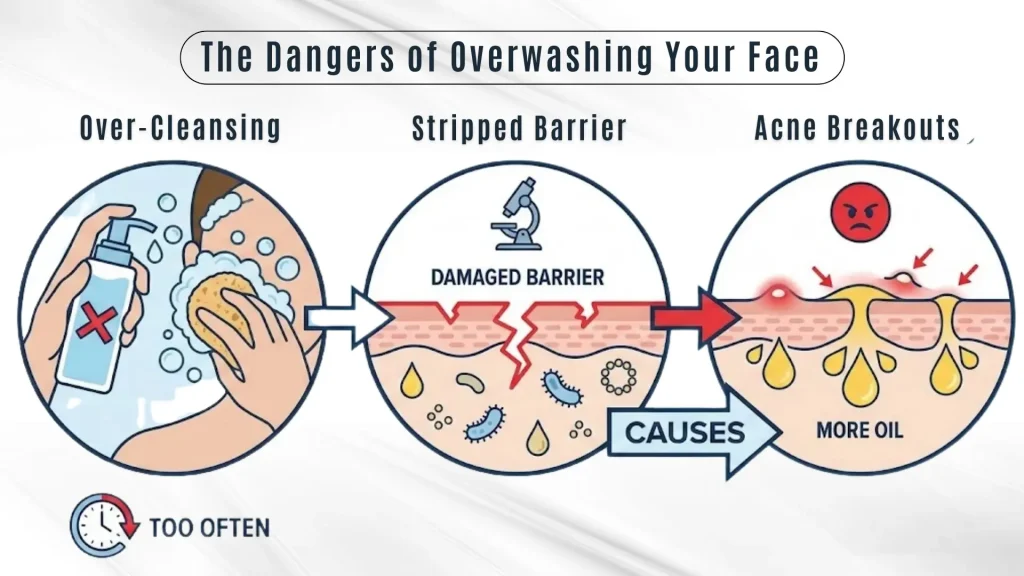
When you wash your face too often or use harsh foaming cleansers, you strip this barrier. Your skin panics and responds by producing even more oil, which clogs pores and fuels breakouts.
Dermatologist’s Insight
“A compromised skin barrier is one of the most overlooked causes of persistent acne. Patients often worsen their acne by over-cleansing rather than under-cleansing.”
— Consultant at Wizderm Skin & Hair Clinic
What to do instead
- Cleanse twice daily only (morning & night)
- Use a gentle, pH-balanced, non-stripping cleanser
- Always follow with a lightweight, non-comedogenic moisturiser.
Pro tip: If your skin feels “squeaky clean” or tight, that’s damage—not cleanliness.
Reason 2: You’re Stuck in the Micro-Trauma Cycle (Touching, Picking, Pressing)
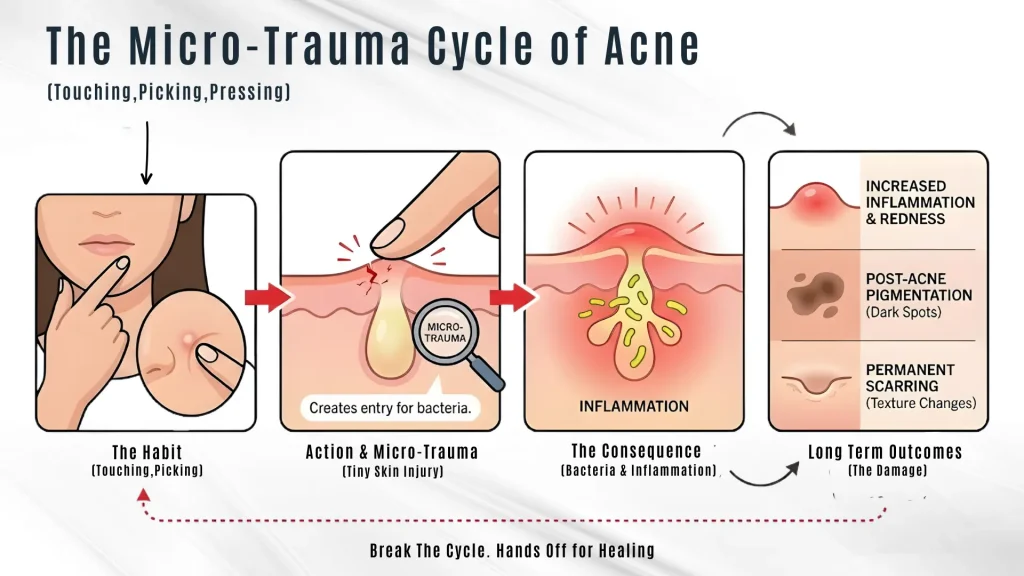
We all do it. Resting your chin on your hand. Touching a bump. Picking “just a little.”
Each time you touch your face, you create “micro-traumas”—tiny skin injuries that invite bacteria and inflammation.
Studies show people touch their face 20+ times per hour. That’s acne fuel on autopilot.
Squeezing pimples doesn’t “empty” them. It pushes bacteria deeper, increasing:
- Inflammation
- Post-acne pigmentation
- Permanent scarring
What actually works
- Hands off. No exceptions.
- Use targeted spot treatments (salicylic acid, benzoyl peroxide)
- For deep or painful acne, professional dermatological intervention is safer and faster
Reason 3: Your Haircare Is Secretly Causing Your Forehead Acne
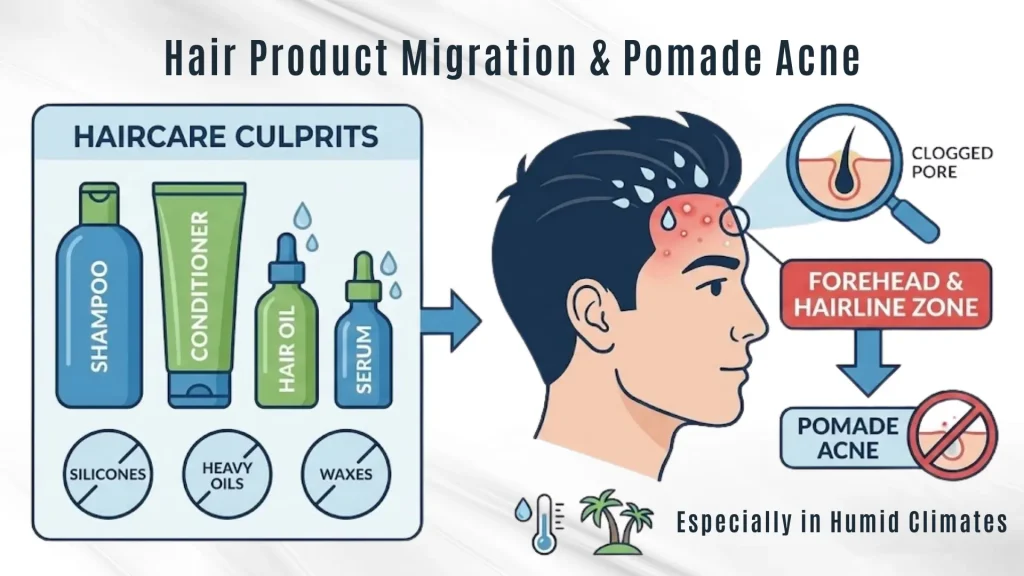
If your breakouts sit around the forehead, temples, or hairline, your skincare may be innocent — your hair products are not.
Shampoos, conditioners, serums, and oils often contain:
- Silicones
- Heavy oils
- Waxes
These migrate onto facial skin, clog pores, and cause pomade acne, especially in humid climates like India.
Fix it fast
- Switch to non-comedogenic, lightweight hair products.
- Rinse hair thoroughly, especially near the hairline.
- Wash your face after styling.
Dead giveaway: Acne that follows the exact line of your bangs, helmet strap, or dupatta edge.
Reason 4: Your Gut and Skin Are in a Fight (And Your Skin Is Losing)
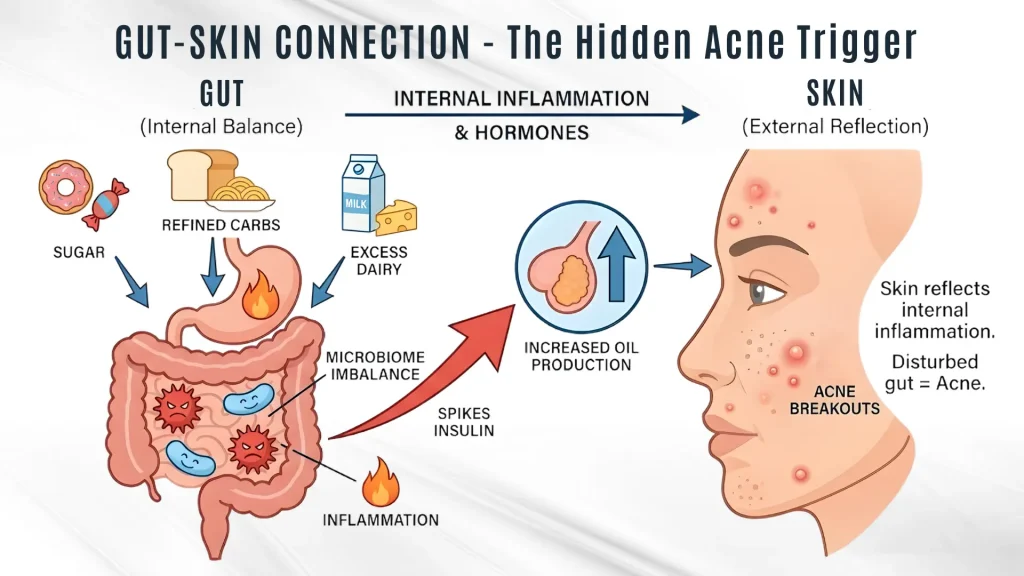
Your skin reflects internal inflammation. Period.
Diets high in:
- Sugar
- Refined carbs
- Excess dairy
Spike insulin levels, triggering hormones that increase oil production and acne.
Emerging research in Dermatology Reports shows the gut microbiome plays a major role in controlling skin inflammation. When gut balance is disturbed, acne often follows.
Wizderm’s Clinical Advice
- Stay hydrated — dehydration slows skin healing
- Focus on whole, fibre-rich foods.
- Include probiotic foods (curd, kefir, fermented foods).
Reason 5: Cortisol (Stress Hormone) Is Sabotaging Your Skin
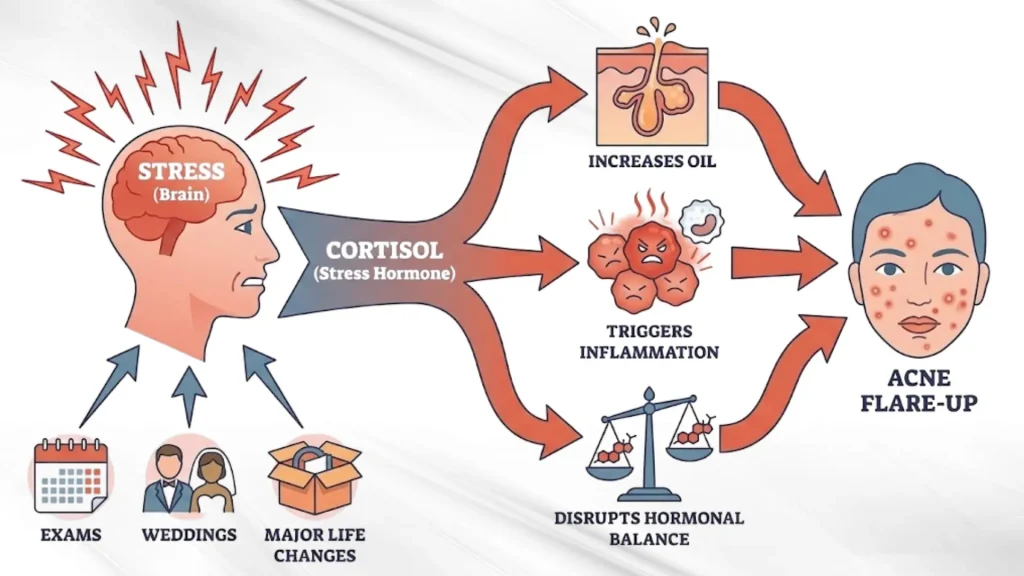
Stress doesn’t just live in your head — it shows up on your face.
When you’re stressed, cortisol:
- Increases oil production
- Triggers inflammation
- Disrupts hormonal balance
This explains why acne flares before exams, weddings, or major life changes.
What helps (realistically)
- Consistent sleep (7–8 hours)
- Regular movement or exercise
- Simple stress-management routines (breathing, yoga, mindfulness)
If your acne worsens during stressful phases, a dermatologist can help break the stress–acne cycle clinically.
Reason 6: The Things Touching Your Face Are Dirty (Even If Your Skin Isn’t)
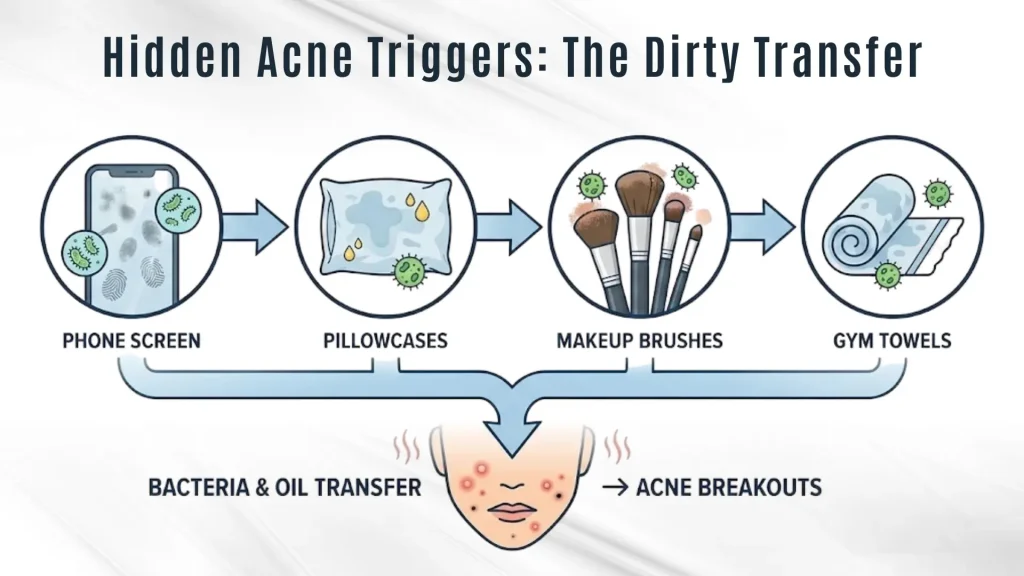
Your phone screen. Pillowcases. Makeup brushes. Gym towels.
They collect oil, sweat, and bacteria — and transfer them straight onto your pores.
Studies from Northwestern Medicine show mobile phones carry more bacteria than toilet seats. Combine that with facial heat, and breakouts thrive.
Fix the basics
- Clean phone screens daily
- Change pillowcases twice weekly
- Wash makeup brushes every 5–7 days
Small hygiene upgrades = big acne improvements.
Bonus Reason: You’re Product-Hopping Too Fast
Acne treatments don’t work overnight.
Constantly switching products:
- Disrupts your skin barrier
- Prevents actives from working
- Triggers irritation and breakouts
Most acne treatments need 6–8 weeks to show results. Mild purging is normal. Chaos is not.
Dermatologist Backed Skincare Routine
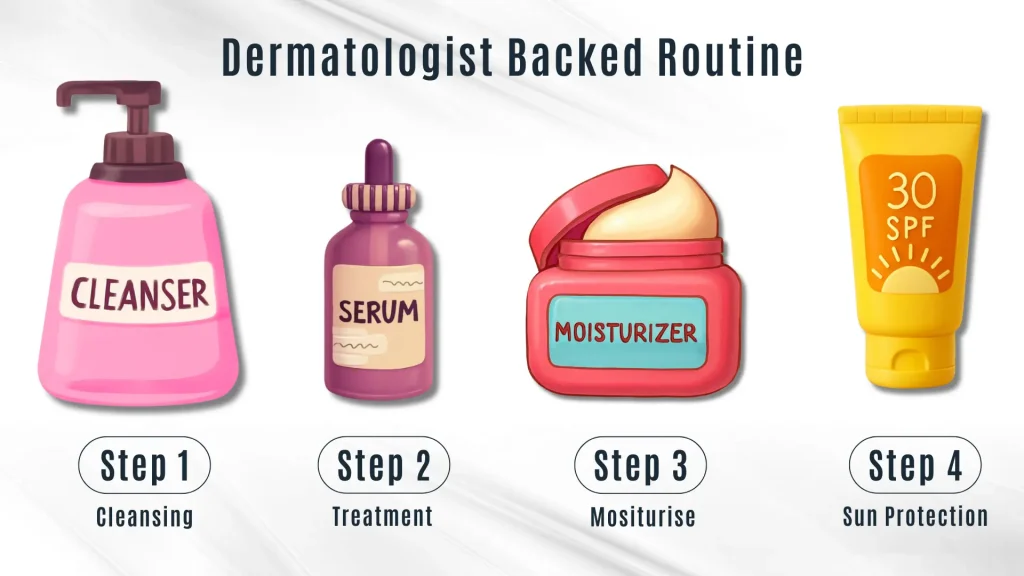
Cleanser → Treatment → Moisturiser → Sunscreen (AM only)
If acne worsens or burns, stop experimenting and see a professional.
When Should You See a Dermatologist?

If your acne:
- Is painful or cystic
- Is leaving scars or dark marks
- Is affecting confidence or mental health
…it’s time to stop DIY-ing.
At Wizderm, dermatologists identify the root cause — hormonal, bacterial, inflammatory, or lifestyle-related — and create personalised treatment plans, including:
- Medical-grade topical treatments
- Oral medications (if needed)
- Chemical peels
- Laser & light therapies
Final words of Wizderm
Acne is rarely just a skin problem. It’s a reflection of your habits, hormones, stress, and skin barrier working (or not) together.
The good news? Acne is treatable and manageable with the right approach.
At Wizderm, we combine science-backed dermatology with personalised care, so you’re not just treating pimples — you’re preventing them long-term.
👉 Book your consultation today and take the first real step toward clearer skin.
FAQs
Why does my acne keep coming back even after treatment?
Recurring acne often means the root cause hasn’t been addressed. Hormones, stress, skincare mistakes, or incomplete treatment can all lead to relapses.
Why is adult acne becoming more common?
Stress, hormonal imbalances, lifestyle changes, and disrupted sleep cycles make adult acne increasingly common, especially in women.
Can acne be cured permanently?
Acne can’t always be “cured,” but with consistent dermatological care, it can be controlled long-term and prevented from recurring.
How long does dermatologist acne treatment take to work?
Most treatments show visible improvement in 6–8 weeks, with continued improvement over 3–6 months.
Can acne scars be removed completely?
While complete removal is rare, advanced treatments like lasers and microneedling can dramatically reduce scars and improve skin texture.