Top Hair Loss Symptoms & Why You Shouldn't Ignore Them

In This Article
Noticing more strands in your brush lately? Or does your once-full ponytail suddenly feel… downgraded? Hair loss rarely shows up overnight — it begins with small, easy-to-ignore changes that creep in quietly. And while shedding a bit every day is totally normal, there is a tipping point between routine hair fall and early warning signals your scalp is waving at you.
These hair loss symptoms can reveal a lot about your overall health, from nutrient gaps and hormonal shifts to thyroid issues or even autoimmune conditions. The earlier you spot them, the easier it is to prevent long-term thinning.
In this blog, we break down the red flags you should never overlook — whether it’s a receding hairline, excessive shedding, widening parting, or changes in scalp texture. Think of this as your early-detection playbook for keeping your hair stronger, fuller, and thriving.
Understanding the Difference Between Normal and Abnormal Signs of Hair Loss
Hair loss is a normal part of the hair growth cycle — everyone sheds some hair every day. But here’s the real challenge: how do you know when shedding is harmless and when it’s a red flag for early balding or a scalp condition? Dermatologists often see patients only after significant thinning has already begun, simply because the early signs are subtle. Let’s decode this properly.
What Is Considered Normal Hair Shedding?
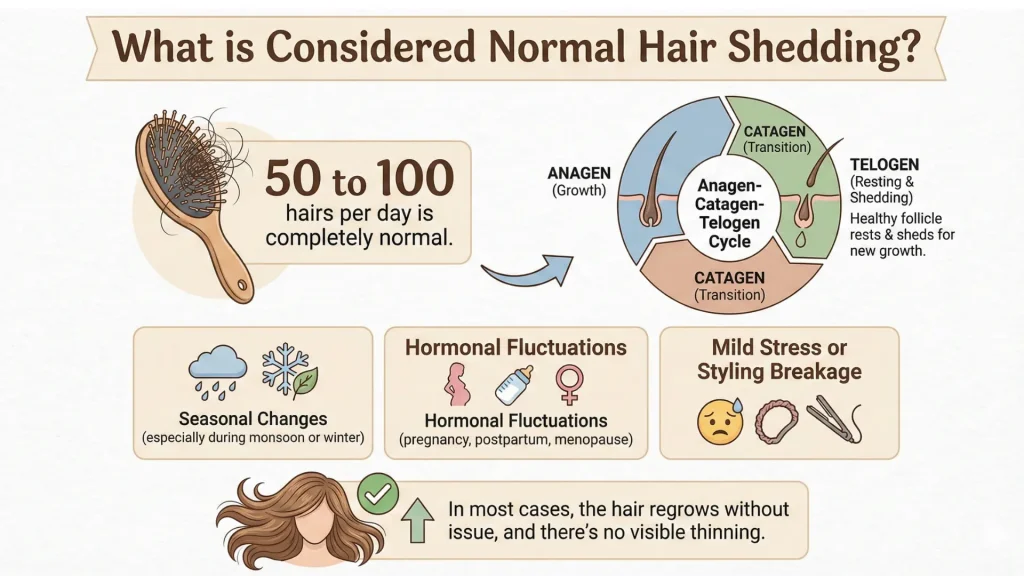
Losing 50 to 100 strands a day is completely normal. This is part of the Anagen–Catagen–Telogen Cycle, where old hair naturally sheds to make room for new growth. Temporary increases in shedding can also happen due to:
- Seasonal changes (especially monsoon and winter)
- Hormonal shifts (pregnancy, postpartum, menopause)
- Mild stress, tight hairstyles, or brushing-related breakage
As long as the follicle remains healthy, your hair usually regrows without thinning or visible changes in volume.
What Counts as an Abnormal Sign of Hair Loss?
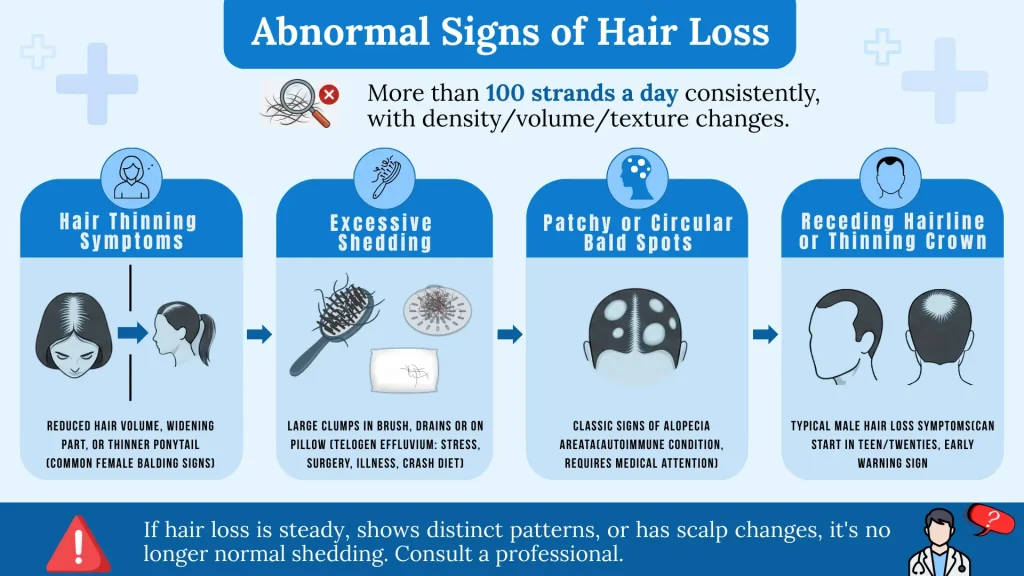
Abnormal hair loss shows clear, noticeable hair loss symptoms that go beyond everyday shedding. If you’re consistently losing more than 100 strands a day and noticing changes in density, volume, or scalp visibility, you may be experiencing:
- Hair thinning symptoms: Reduced volume, widening part, or a noticeably thinner ponytail — often seen as early female balding symptoms.
- Excessive shedding: Large clumps in your brush, pillow, or shower drain, commonly linked to Telogen Effluvium, a stress- or illness-triggered condition.
- Patchy or circular bald spots: Classic indicators of Alopecia Areata, an autoimmune condition that requires timely medical evaluation.
- Receding hairline or thinning crown: Typical male-pattern hair loss symptoms, which can start surprisingly early — even in the teenage years.
If your hair fall is persistent, patterned, or accompanied by scalp changes, it’s no longer just regular shedding. These are early warning signs you shouldn’t ignore.
Top Hair Loss Symptoms to Watch For
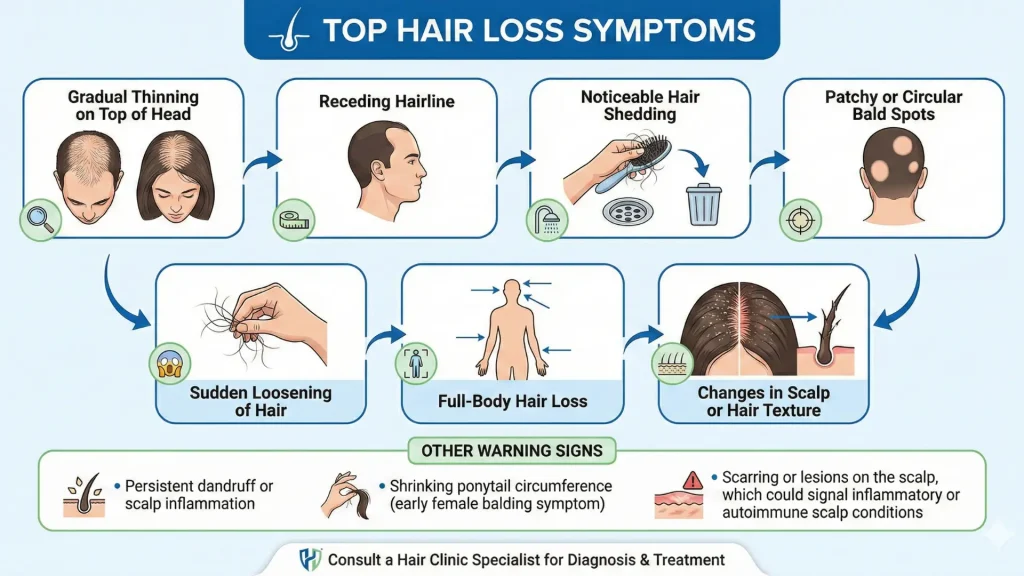
Recognising the right signs early can mean the difference between temporary shedding and long-term thinning. Below are the most common — and most concerning — hair thinning symptoms. Some are subtle; others are big red flags you should never ignore.
Gradual Thinning on Top of Head
Gradual thinning is one of the earliest and most easily overlooked hair loss symptoms. It usually begins at the crown or along the part line.
- In men: This shows up as a receding hairline or thinning crown — classic male pattern baldness
- In women: It appears as a widening part or overall loss of volume — common early female pattern baldness
Because this type of thinning develops slowly, many people don’t realise it’s happening until there’s a visible drop in density.

Receding Hairline
A receding hairline is one of the most recognisable early markers of hair loss, particularly in men, though women can experience it too. It typically begins with thinning at the temples, creating an “M” or “V”-shaped pattern as it progresses.
In some cases, this starts as early as the teenage years — a strong indicator of baldness in teenagers, often linked to genetics or hormonal changes. A receding hairline is a hallmark feature of male pattern baldness (androgenetic alopecia) and generally worsens without treatment.
Stress, nutritional deficiencies (like vitamin D and B12), and lifestyle habits can speed up recession. Identifying the shift early matters, as treatments like topical minoxidil, PRP therapy, and lifestyle improvements can slow — and sometimes partially reverse — the progression.
Noticeable Hair Shedding
Shedding is normal — but when you start noticing more hair during brushing, washing, or waking up to hair-covered pillows, it may signal something deeper.
- Often linked to Telogen Effluvium, where stress or illness pushes more hairs into the shedding phase.
- Can also occur due to Vitamin D deficiency, postpartum hormonal shifts, or rapid lifestyle changes.
This type of shedding is typically diffuse, affecting the entire scalp, and tends to appear suddenly.

Patchy or Circular Bald Spots
Coin-sized bald patches on the scalp, beard, or eyebrows strongly indicate Alopecia Areata, an autoimmune condition where the immune system attacks hair follicles.
- Symptoms of alopecia in females may include sudden patchy thinning or stress-triggered shedding episodes.
- These spots can expand quickly, making early diagnosis and intervention critical.
Sudden Loosening of Hair
If your hair falls out easily when lightly tugged, especially after major physical or emotional stress, it may point to Telogen Effluvium symptoms.
Common triggers include:
- Surgery or major illness
- Childbirth
- Significant weight loss
- High, unrelenting stress
Hair can fall in handfuls during this phase, but regrowth usually begins once the underlying issue is addressed.
Full-Body Hair Loss
Full-body hair loss affects not just the scalp but eyebrows, eyelashes, arms, legs, and even pubic hair. This rare but serious symptom often indicates an underlying systemic condition.
A major cause is Alopecia Universalis (AU) — a severe autoimmune disorder that attacks all hair follicles across the body. It may start suddenly and progress rapidly.
Other potential triggers include:
- Chemotherapy or radiation
- Severe vitamin D or B12 deficiency
- Thyroid disorders
- Chronic illnesses (like lupus or diabetes)
- Systemic infections or prolonged high fever
- Certain medications or immunosuppressants
If you notice full-body hair loss, medical evaluation is essential. Unlike regular hair thinning symptoms, AU often requires coordinated care across specialties.
Changes in Scalp or Hair Texture
Before visible thinning begins, your scalp and hair often send early warning signals:
- Brittle, dry, or easily breakable hair
- Itchy, flaky, or inflamed scalp
- Presence of sores, bumps, or redness
These may indicate scalp infections, psoriasis, dermatitis, or nutritional gaps — especially vitamin B12 deficiency, which can contribute to hair loss. Texture changes frequently accompany female pattern baldness and diffuse thinning.
Other Warning Signs
- Persistent dandruff or scalp inflammation
- Shrinking ponytail circumference (early female balding symptom)
- Scarring or lesions on the scalp — potential signs of inflammatory or autoimmune scalp disorders
Even subtle changes like these may signal the early symptoms of hair loss. Ignoring them allows progression to become more visible and harder to treat.
Why You Shouldn’t Ignore Hair Fall Symptoms
Hair loss isn’t just a cosmetic concern — it’s often an early signal of what’s happening inside your body. Mild shedding or subtle thinning may seem harmless at first, but these shifts frequently point to underlying issues such as hormonal imbalance, nutritional deficiencies, chronic stress, or even autoimmune conditions. In many cases, hair loss symptoms are your body’s first warning sign that something needs attention.
Ignoring these signs can lead to long-term damage. Once hair follicles become miniaturised or inactive, they’re much harder to revive. Conditions like Telogen Effluvium symptoms or male pattern hair loss symptoms typically respond far better when addressed early — delaying treatment can increase the risk of permanent thinning or balding.
Staying aware of subtle changes, whether it’s a receding hairline, sudden shedding, or shifts in hair texture, gives you the best chance of early diagnosis and recovery. Don’t wait until the bald patches are obvious — your hair (and your health) deserve proactive care.
When to See a Doctor

Not all hair loss is a red flag, but certain symptoms should never be ignored. If you notice sudden shedding, patchy bald spots, a rapidly receding hairline, or a noticeable drop in hair density, it’s time to consult a dermatologist. These signs may indicate conditions such as androgenetic alopecia, Telogen Effluvium, autoimmune disorders, or nutrient deficiencies like vitamin D and vitamin B12, all of which can contribute to progressive hair loss.
You should also seek medical attention if you have a family history of balding, are experiencing baldness in your teenage years, or if over-the-counter treatments aren’t slowing your symptoms. Early medical evaluation is crucial to prevent long-term follicle damage and improve treatment outcomes.
At Wizderm Skin and Hair Clinic, our dermatologists provide accurate diagnosis and personalised treatment plans — from clinical assessments and advanced therapies like PRP to targeted nutrition-based recovery strategies.
Action Steps if You Notice Hair Fall Symptoms
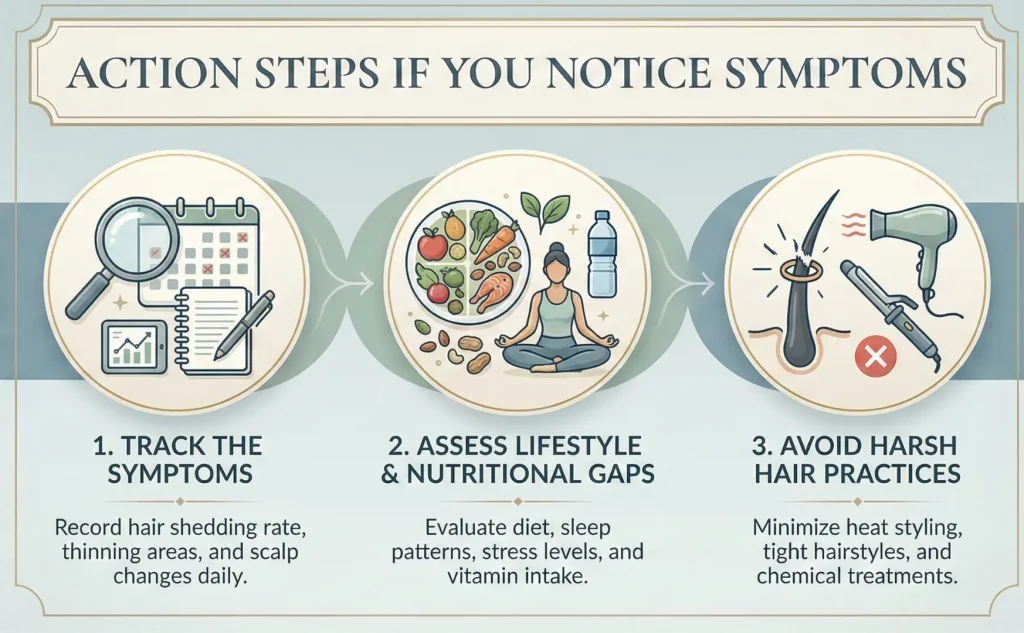
If you’re beginning to see signs of thinning, shedding, or any unusual hair loss symptoms, acting early can dramatically improve your chances of recovery. Hair loss is often progressive — the longer you wait, the harder it becomes to slow, reverse, or manage. Here’s what to do next:
Track the Symptoms of Hair Loss
Start by documenting what you’re experiencing. Consistent tracking helps identify patterns and gives your dermatologist accurate insights.
- Take weekly photos of your scalp, especially the hairline and crown.
- Monitor the amount of hair you lose in the shower, on your pillow, or in your brush.
- Measure your ponytail thickness if applicable — changes here are one of the earliest and most reliable indicators of density loss.
Assess Lifestyle & Nutritional Gaps
Healthy hair depends heavily on internal balance. Evaluate your diet and daily habits:
- Ensure adequate intake of vitamin D, vitamin B12, iron, and protein — deficiencies in any of these can contribute to hair loss.
- Address stress, poor sleep, or excessive hairstyling, all of which can worsen hair thinning symptoms.
A basic blood panel (under medical guidance) can help rule out nutritional or hormonal imbalances early on.
Avoid Harsh Hair Practices
While experiencing symptoms, treat your hair gently to minimise further damage:
- Avoid heat styling tools, tight hairstyles, harsh chemical treatments, and aggressive brushing.
- Use mild, sulphate-free shampoos and nourishing conditioners to protect your scalp barrier.
- Switch to wide-tooth combs and microfiber towels to reduce breakage and friction.
Reducing mechanical and chemical stress gives your follicles a better environment to stabilise and recover
Final words of Wizderm
Ignoring early signs of hair loss can lead to long-term follicle damage that becomes harder — and costlier — to treat. Whether it’s gradual thinning, sudden shedding, patchy bald spots, or noticeable scalp changes, these symptoms go far beyond aesthetics. They often signal deeper issues such as hormonal imbalances, chronic stress, or vitamin deficiencies that need timely attention.
Taking action early gives you far more treatment options — from medical therapies and lifestyle adjustments to nutrition-led recovery. Early intervention isn’t just helpful; it’s the key to preventing progressive thinning.
At Wizderm Skin & Hair Clinic, we specialise in diagnosing and treating every stage of hair loss with personalised, evidence-based solutions. Whether you’re just starting to notice symptoms or dealing with persistent hair fall, our dermatology team is here to guide your recovery and restore your confidence
Ready to Take Control of Your Hair Health?
Don’t wait for visible bald patches or severe thinning to take action. Early diagnosis is the fastest way to stop hair loss and protect your long-term scalp health.
At Wizderm Skin & Hair Clinic, our dermatologists offer:
- Expert scalp analysis & diagnosis
- Personalised treatment plans
- Advanced therapies like PRP, GFC, and microneedling
- Nutrition-guided recovery
- Support for male pattern baldness, female pattern baldness, and Telogen Effluvium
Book your consultation today and get a customised plan built around your hair goals.
FAQs
How do I stop my hair from falling?
If you are noticing symptoms of hair loss and want to stop them, you can start with gentle care. The gentle care includes avoiding using products with harsh chemicals, having hairstyles that need heat and need to be tied tightly. You can also go for topical medications like minoxidil or finasteride under the supervision of a dermatologist.
How to help with hair loss?
To help with hair loss, identify early hair fall symptoms like thinning, increased shedding, or receding hairline. Recognising signs of hair loss early helps you to get timely treatment with lifestyle changes, nutrition, and scalp care. Consulting a dermatologist can also prevent further damage and promote healthy regrowth.
Can hair grow back after thinning?
Hair can grow back after hair thinning if the condition is caused by temporary factors like stress, poor nutrition, and hormonal changes. However, if the hair loss is caused by genetic factors, like androgenetic alopecia, reversal of hair growth becomes challenging. But there are medical treatments that can slow down the process.
Which vitamin deficiency causes hair loss?
Vitamin D, B12, B7, and iron deficiencies are commonly linked to hair loss. These nutrients support hair growth by aiding cell turnover, oxygen delivery, and keratin production. A lack of them can disrupt the hair growth cycle, leading to thinning, shedding, or brittle strands.
Is losing 200 hairs a day normal?
No, losing 50-100 hairs a day is considered normal. If it is more than that, then you might have to consider visiting a dermatologist.